Dr. Khalid Al-Hooshani
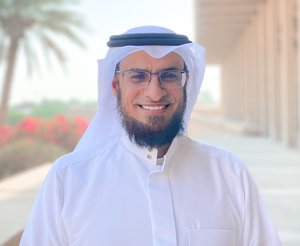
Professor
Dr. Khalid's group utilized their understanding of atomic and molecular interactions to design and develop advanced porous materials for industrial catalytic processes and environmental applications.
📍 Bldg. 4-232
☎ (+966) 13 860 3065
✉ hooshani@kfupm.edu.sa
🔗 ORCID: 0000-0002-6119-668X
🔗 Scopus:
Research Area
⬡ Materials & Nanoscience
Material for Chemical Analysis
This area focuses on the synthesis of polymeric and other porous and functionalized sorbent materials and their utilization in various micro-extraction techniques, including capillary/in-tube microextraction, stir-bar sorptive extraction, and micro-solid-phase extraction, for preconcentration of various pollutants from aqueous samples. The extracted pollutants are then desorbed and injected into the chromatographic system. This research area also includes method development and validation for chromatographic techniques. Additionally, real samples were tested and spiked to check the recovery.
Hydrodesulfurization Catalysts
Research in this area focuses on new hydrodesulfurization catalyst synthesis strategies such as the single-pot approach and support modification through the incorporation of heteroatom(s), additives, surfactants, and swelling agents. The methods of activating the catalysts, both ex situ and in situ, are also being studied. Kinetic studies—both experimental and modeled—are utilized to explain the structure–activity relationship of the catalysts, in addition to cutting-edge characterization tools.
Carbon-Free Atmosphere
Mitigation of atmospheric CO₂ through conversion to valuable products such as methane, methanol, propane, ethylene, and others—which serve as fuels or important industrial raw materials—has attracted significant research interest over the years. CO₂ conversion to fuel and useful chemical intermediates holds enormous environmental and economic benefits, as it could serve as an alternative source of fuel and feedstock for the chemical industries.
The goal of our research group is to develop highly efficient novel electrocatalysts for CO₂ reduction. Our team utilizes state-of-the-art electrochemical and atomistic modeling facilities to reveal detailed chemical information on the catalysts and provide new insights that will aid in the design of potential CO₂ reduction catalysts.
CO₂ Dry Reforming
This research area emphasizes the synthesis of catalysts suitable for reducing CO₂ emissions and converting CO₂ into an important mixture called syngas. The synthesis and design of the material are crucial to prevent catalyst deactivation due to coking. Therefore, the proposed material must possess hierarchical properties with intrinsic mesopores. The role of suitable metal or bimetallic impregnation also needs to be explored.
Education
✔︎ PhD
✔︎ MSc
✔︎ BSc
- Publication 10 (latest)
- Publication 9
- Publication 8
- Publication 7
- Publication 6
- Publication 5
- Publication 4
- Publication 3
- Publication 2
- Publication 1