Dr. Tawfik Saleh
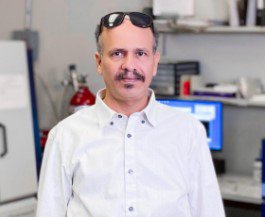
Distinguished Professor, CX & Minor in Chemistry Coordinator
Dr. Tawfik Saleh research work focuses on the design of nanomaterials, green chemistry, smart reaction processing, chemical functionalities, methodologies, nanocomposites properties, and applications. He published several Books.
📍 Bldg. 4-104-6
☎ (+966) 13 860 7343
🔗 ORCID: 0000-0002-3037-5159
🔗 Scopus: 35103346400
Research Area
⬡ Nanomaterials and Nanocomposites
⬡ Smart reaction processing with the use of DFT and AI tools
⬡ Applications of Nanomaterials and Hybrids
Synthesis and Design of Functional Nanomaterials
Dr. Tawfik Saleh’s research focuses on the rational design, synthesis, and engineering of functional nanomaterials and organic/inorganic hybrid nanocomposites with tailored physicochemical properties. His group develops carbon-based nanostructures, metal and metal-oxide nanoparticles, and polymer–nanomaterial composites through controlled and often environmentally conscious synthetic routes. Emphasis is placed on understanding structure–property relationships to optimize performance in chemical and environmental applications. By integrating surface modification, compositional tuning, and nanoscale architecture control, this work enables the creation of materials with enhanced surface area, reactivity, selectivity, and stability, suitable for advanced technological uses.
Organic/inorganic Hybrid Nanocomposites for Sustainable Energy applications
Dr. Saleh’s research also explores hybrid and composite nanomaterials for energy and sensing applications. By combining nanoparticles, carbon nanostructures, and polymers, his group creates multifunctional materials capable of enhanced catalytic activity and sensitive chemical detection. These systems are applied in areas such as heterogeneous catalysis, electrochemical sensing, and energy. The integration of multiple functional components within a single material platform enables synergistic effects, improving performance beyond that of individual constituents. This approach facilitates the development of robust, high-sensitivity materials suitable for real-world chemical and analytical applications.
Adsorption, Membrane, and Environmental Remediation Materials
A major research direction in Dr. Saleh’s group is the development of nanostructured adsorbents, photocatalysts, and membranes for environmental remediation, particularly water purification and fuel treatment. The group investigates adsorption mechanisms for the removal of heavy metals, dyes, pharmaceuticals, and sulfur-containing compounds using engineered carbon materials, nanocomposites, and surface-functionalized sorbents. Through systematic studies of adsorption kinetics, isotherms, and regeneration behavior, these materials are optimized for efficiency, reusability, and operational simplicity. The work provides scalable and cost-effective solutions to pressing environmental challenges while contributing fundamental insight into adsorption phenomena at the nanoscale.
Sustainable Materials Chemistry and Practical Impact
Across all research themes, Dr. Saleh emphasizes sustainability, scalability, and real-world applicability. His work contributes to cleaner chemical processes, resource efficiency, and environmentally responsible material solutions. By combining advanced synthesis, detailed characterization, and application-driven testing, his research provides a comprehensive framework for translating nanomaterials from the laboratory to practical use with the use of computational chemistry, DFT, and artificial intelligence (AI) tools.
Education
✔︎ PhD: King Fahd University of Petroleum and Minerals
✔︎ MSc: King Fahd University of Petroleum and Minerals
✔︎ BSc: University of Science and Technology
- MU Zarewa, TA Saleh, 2025. Refinery-Waste-Derived Carbon Quantum Dots for Selective Metal Ion Fluorescence Sensing: Experimental, DFT, and Deep Learning Insights, ACS Sustainable Resource Management 2 (10), 1929-1937
- SE Alharbi, MU Zarewa, TA Saleh, 2025. Integrated adsorption–electrocoagulation for dyes removal using solid petcoke-derived activated carbon coupled with predictive machine learning models, Diamond and Related Materials, 112825
- MU Zarewa, TA Saleh, 2025, Experimental and artificial intelligence molecular models to predict quenching behavior of carbon materials from petroleum waste for sustainable corrosion monitoring, RSC advances 15 (46), 39059-39070
- TA Saleh, KO Sulaiman, SA AL-Hammadi, 2020. Effect of carbon on the hydrodesulfurization activity of MoCo catalysts supported on zeolite/active carbon hybrid supports, Applied Catalysis B: Environmental 263, 117661
- AB Olabintan, TA Saleh, A Al-Ahmed, 2025, Polyaniline intercalated layered VOPO4· 2H2O: An organic-inorganic hybrid cathode for high performance aqueous zinc-ion batteries, Journal of Energy Storage 120, 116426
- TA Saleh, 2020, Characterization, determination and elimination technologies for sulfur from petroleum: Toward cleaner fuel and a safe environment, Trends in Environmental Analytical Chemistry 25, e00080
- TA Saleh, 2022, Experimental and analytical methods for testing inhibitors and fluids in water-based drilling environments, TrAC Trends in Analytical Chemistry 149, 116543
- TA Saleh, 2020, Experimental and analytical methods for testing inhibitors and fluids in water-based drilling environments, TrAC Trends in Analytical Chemistry 149, 116543
- N Dhenadhayalan, KC Lin, TA Saleh, 2020, Recent advances in functionalized carbon dots toward the design of efficient materials for sensing and catalysis applications, Small 16 (1), 1905767
- Polymer Hybrid Materials and Nanocomposites: Fundamentals and Applications (Plastics Design Library), Part of: Plastics Design Library (books) by Tawfik Abdo Saleh | Aug 28, 2021

Maimuna Zarewa
PhD Student

PhD Student
Maha Aqeel A Alaqeel
PhD Student
Marwah Ahmed Y Alabdulrahem
PhD Student
Zuhur Jameel Q Ali
PhD Student
Ayoub Awaji
PhD Student
Abbas Abdullahi Adamu
PhD Student
Manar Khaled Obeidat
MS Student
Mariem Ben Slimene
MS Student
Shamah Eid Alharbi
MS Student
Mohammad Yahya Aljizani
MS Student
Salah Jaber Almutairi
MS Student
| Undergraduate Courses Taught |
|---|
|
• CHEM 472 Senior Project II (0-8-2): Students continue their research under the direct guidance of faculty members. Students are given the opportunity to be trained on and use advanced experimental techniques in a specific research project to enhance their independent thinking and develop skills of executing their own experiments. • CHEM 471 Senior Project I (0-8-2): Students are introduced to research through a specific research project under the direct guidance of faculty members. They are exposed to the fundamentals of basic research where they experience various experimental techniques, analyzing data, interpreting results and directing their focus to the process of scientific discovery. • Instrumental chemical analysis CHEM 323 (2:0:2): Instrumental analysis techniques such as molecular and atomic spectrophotometry: absorption and emission spectroscopy, electroanalytical techniques of analysis with emphasis on potentiometry and voltammetry, chromatography, and thermal analysis. • Instrumental chemical analysis CHEM 323 Lab (0:4:1): Experiments related to qualitative and quantitative analysis using various instrumental techniques. • Basics of Environmental Chemistry CHEM 111 (2:0:2): Elements, compounds, chemical equations, and gas laws, spontaneity of reactions, chemical kinetics, chemical equilibria (gases, acids and bases, redox and complexation reactions), organic structures and reactions, carbohydrates, proteins and fats, pesticides and organic pollutants, colloids • General Chemistry II CHEM 102 Lectures and Labs (3:4:4): Chemical equilibria (gases, acids and bases, and solubility equilibria), chemical kinetics, spontaneity of reactions, coordination chemistry, nuclear chemistry, electrochemistry, chemistry of selected representative elements, organic structure and reactions, chemistry of materials. • Laboratory: Qualitative and quantitative aspects of general chemistry. • General Chemistry CHEM 101 Lectures and Labs (3:4:4): Matter, atomic structure and the periodic table, chemical bonding, stoichiometry of pure substances, reaction in aqueous solutions, states of matter (gases, liquids, and solids), mixtures (with emphasis on some physical aspects of solutions), thermochemistry. • Laboratory: Qualitative aspects of general chemistry. |
| Graduate Courses Taught |
|---|
|
• CHEM642 Chemometrics (3-0-3): Basic Statistics, Analysis of Variance (ANOVA), Computer Software, Principles of Experimental Design, Factorial Designs and Analysis, Fractional Factorials, Response Surface Methodology, Second-order Designs, Application of the chemical Optimization by simplex. • CHEM 640 Analytical Spectroscopy (3-0-3): Principles and analytical applications of modern molecular and atomic spectroscopy. Ultraviolet, visible, infrared, luminescence and scattering techniques. Flame, plasma, emission techniques, atomic absorption and atomic fluorescence techniques. • CHEM 606 Independent Research: Research course intended to advice graduate students to initiate original research work. It includes mainly experimental/theoretical work in addition to formal meetings with the instructor and independent library work. • CHEM 701 Dependent Research: Research course intended to advice PhD graduate students to initiate original research work. It includes mainly experimental/theoretical work in addition to formal meetings with the instructor and independent library work. • CHEM 702 Dependent Research: Research course intended to advice PhD graduate students to progress advanced research work. It includes mainly experimental/theoretical work in addition to formal meetings with the instructor and independent library work. • CHEM 711 Dissertation: PhD PreDissertation. • CHEM 710 Dissertation: PhD Dissertation. • CHEM 712 Dissertation: PhD Complete Dissertation. • CHEM 610 Thesis: M.S Thesis. • ENVS 610 Thesis: M.S Thesis. • CHEM643 Environmental analysis chemistry (3-0-3) • CHEM 545 Environmental Chemical Analysis: Advanced Instrumentation (3-0-3) Educational Papers and articles (Selected) 1- Tawfik A. Saleh, Strategy for Integrating Basic Concepts of Nanotechnology to Enhance Undergraduate Education, American Scientific Publishers, Journal of Nano Education, Volume 4, Numbers 1-2, 2013 , pp. 1-7(7) Publication date: 2013-03-01 2- Tawfik A. Saleh, 2011, Testing the effectiveness of visual aids in chemical safety training, Journal of Chemical Health and Safety, Division of Chemical Health and Safety of the American Chemical Society, March/April 2011, 18(2), 3-8doi:10.1016/j.jchas.2010.03.012, 3- Tawfik A. Saleh, “Pre-laboratory Visualization Techniques to Support Learning and Teaching of Introductory Chemistry Laboratory” Chemical Education Journal (CEJ), Vol. 12, No. 1 (2009). 4- Tawfik A. Saleh, “Effectiveness of E-Learning in the Chemistry Laboratory: Case Study”, International Conference of E-learning and Distance Education (eLi 2011), 21-24 Feb, Riyadh, SA, Full paper in proceeding, Tawfik A. Saleh, Concept Mapping: a Learning Strategy for teaching Instrumental Chemical Analysis course, 2129486 [CHED] Division of Chemical Education, Accepted in ACS conference, 2015 5- Tawfik A. Saleh, 2011 Teaching Tip: Spark ChE Students' Interest in Chemistry Lab by Cooperative Strategy-Inside front cover, Chemical Engineering Education 45 (3) 6- Tawfik A. Saleh, 2011, Statistical analysis of cooperative strategy compared with individualistic strategy: an application study, The Journal of Effective Teaching 11 (1), 19-27; The journal is supported by the Center for Teaching Excellence at the University of North Carolina Wilmington 7- Tawfik A. Saleh, NY Abu-Thabit, 2009, Statistical Evaluation of Rounding Cooperative Learning Strategy, Chemical Education Journal (CEJ), Vol. 13, No. 2 /Registration No. 13-20 /Received December 4, 2009,. 8- Tawfik A. Saleh, Evaluation of Cooperative Strategy versus Competition Strategy: Statistical Case Study, Eurasian Journal of Physics and Chemistry Education, Vol 3, (2011)1 9- Tawfik A. Saleh, “Visualization Resources: To Better Utilize Lab-Time and to Enhance Teaching Introductory Chemistry Laboratory”, J. of Comput. Chem., Japan., Vol 8, No. 2 (2009) pp: 93-96 10- Tawfik A. Saleh, (2011). Statistical Analysis of Cooperative Strategy Compared with Individualistic Strategy: An Application Study. The Journal of Effective Teaching, 11(1), 19-27. 11- Tawfik A. Saleh, Teaching world, old methods and new technologies of education, University magazine, 2009, v. 391, page 10, ISSN1319-0741: 391 12- Tawfik A. Saleh, Exams testing both students and teachers, king Fahd University magazine, march 7, 2009, v. 400, page 14, ISSN1319-0741 13- Tawfik A. Saleh, Safety Education for Future Generation, Future, Volume XXIX, N. 2, Page 6 14- Tawfik A. Saleh, Preparing students to be aware about safety at workplace, ORGANON 2011, Issue 2, page 5, Saudi Arabian International Chemical Sciences Chapter of the American Chemical Society 15- Tawfik A. Saleh , تقنية النانو وتطور الحفازات ORGANON 2011, Issue 3, page 4-5, Saudi Arabian International Chemical Sciences Chapter of the American Chemical Society |